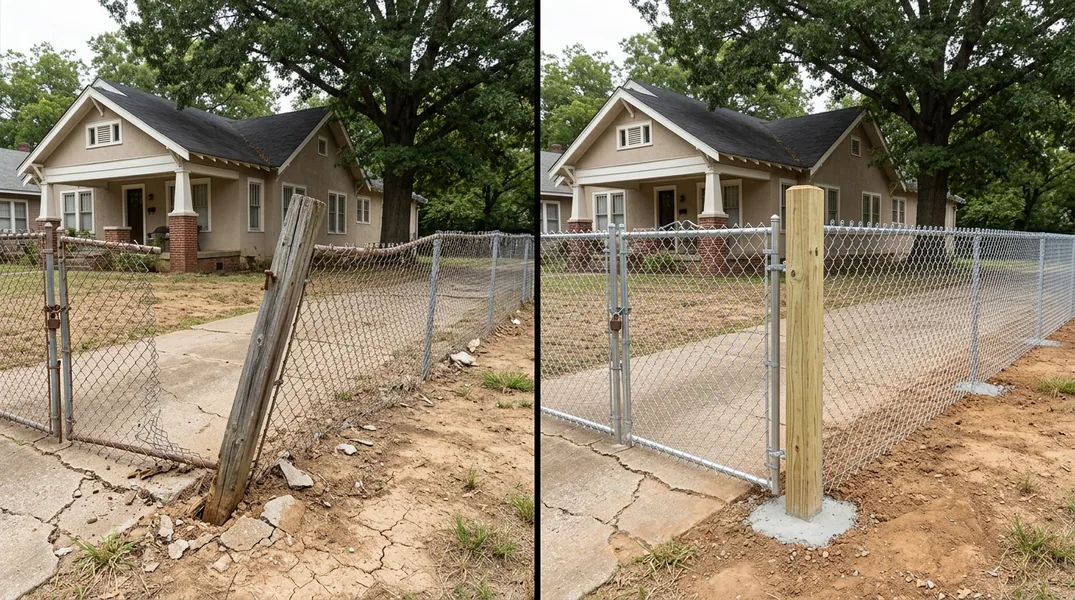
Why Little Rock Fences Lean: The Expansive Clay Problem
If you've noticed your fence leaning or tilting, you're not alone. Many homeowners in Little Rock face this frustrating issue, and the culprit is often right beneath the surface. Arkansas sits in a region known for expansive clay soil, a geological reality that wreaks havoc on fence stability. Expansive clay swells when it absorbs moisture and shrinks when it dries out, creating constant movement that destabilizes fence posts over time.
This natural soil condition is one of the primary reasons why Wood & Privacy Fence Installation requires careful planning and proper post installation techniques in our area. When a fence post sits in expansive clay without adequate drainage or depth, the shifting soil pushes and pulls at the post, gradually tilting it out of plumb. The problem compounds during seasonal changes, when Arkansas experiences heavy spring rains followed by hot, dry summers. Your fence may look fine in winter, only to lean noticeably by mid-summer as the clay contracts.
Loose Posts and Poor Installation: Common Culprits Behind Leaning Fences
Beyond soil conditions, improper fence post installation is a leading cause of leaning fences. Many budget-conscious installations use shallow post holes, sometimes only 18 to 24 inches deep, when the industry standard for residential fencing calls for at least 30 inches, with 36 inches or more recommended in areas with expansive soil. A post that isn't set deep enough lacks the anchoring power needed to resist soil movement and weather stress. Additionally, posts set in concrete that's poorly mixed or not properly compacted will eventually shift and settle unevenly.
Another common problem is inadequate post bracing during the curing phase. When concrete is first poured, the post must remain perfectly vertical while the concrete hardens, typically 24 to 48 hours. If temporary bracing is removed too early or if the post wasn't properly plumbed to begin with, it can start leaning from day one. Over time, as the fence endures wind loads, temperature fluctuations, and the relentless pressure of expansive clay, that initial lean becomes more pronounced. This is why choosing an experienced installer who understands North Little Rock and Little Rock soil conditions makes a real difference in fence longevity.
Recognizing the Signs: When Your Fence Needs Attention
Catching a leaning fence problem early can save you money and prevent further damage. The most obvious sign is visible tilting, where the fence line deviates from vertical when viewed from the side. However, other warning signs include gaps appearing between fence boards, difficulty opening or closing a gate, or pickets that no longer sit flush against the rails. You might also notice that the fence seems to lean more noticeably after heavy rain or during the dry season, which is a telltale indicator of soil movement rather than simple settling.
Listen for creaking or popping sounds during wind, which suggests the posts are shifting under stress. Check the base of posts for signs of soil erosion, exposed concrete, or standing water, all of which accelerate post deterioration. If you spot these issues early, fence post repair or replacement can often address the problem before it spreads to adjacent sections. Waiting too long can result in a domino effect, where one failing post causes uneven stress on neighboring posts, eventually compromising the entire fence structure.
Fence Post Repair and Replacement: Your Options
When it comes to fixing a leaning fence, you have several options depending on the severity of the problem and the age of your fence. For minor leans where the post is still structurally sound, a professional may be able to straighten the fence by adding additional bracing or using a technique called post reset. This involves carefully re-leveling the post and reinforcing it with supplemental concrete or metal bracing. However, this approach works best on newer fences where the underlying post is still strong.
In most cases, especially with older fences or posts that show signs of rot or damage, fence post replacement is the most reliable long-term solution. A qualified fence contractor will remove the damaged post, excavate the old concrete, and install a new post set at the proper depth with correctly mixed and compacted concrete. The key to preventing the problem from recurring is addressing the root cause: ensuring proper drainage around the post, setting the post deep enough to resist soil movement, and using concrete that's appropriate for Arkansas's expansive clay conditions.
Preventing Future Problems: Best Practices for Fence Stability
The best approach to dealing with leaning fences is prevention. If you're planning a new Wood & Privacy Fence Installation in Little Rock, work with a contractor who understands local soil conditions and builds accordingly. Posts should be set at least 30 to 36 inches deep, with concrete extending 4 to 6 inches above grade. The concrete should be mixed to a proper consistency and compacted thoroughly to eliminate air pockets. Additionally, ensure adequate drainage around the post base by sloping the ground away from the fence or installing drainage rock.
Consider the orientation of your fence relative to prevailing winds and water flow. Posts on the downhill side of a slope experience more water pressure and soil saturation, making them more prone to movement. Regular maintenance also plays a role in longevity. Inspect your fence annually, particularly after heavy storms or during seasonal transitions. Look for early signs of leaning and address them promptly. If you notice any concerns or want a professional assessment, Little Rock Fence Pros can provide a free estimate and help you understand your options.
When to Call a Professional: Leaning Fence Repair Near Me
While some homeowners attempt DIY fence repairs, leaning fence issues often require professional expertise. Diagnosing the root cause, determining whether repair or replacement is appropriate, and executing the work safely all demand experience and proper equipment. A professional contractor has the knowledge to assess soil conditions, understand how expansive clay will behave, and recommend solutions that will actually last.
If your fence is leaning or you're concerned about its stability, don't wait for the problem to worsen. Contact Little Rock Fence Pros at (501) 476-2299 to schedule a consultation. Our team has years of experience with fence post replacement and leaning fence repair throughout the Little Rock area. We'll evaluate your fence, explain what's causing the problem, and provide honest recommendations for the best course of action. Whether you need a single post replaced or a comprehensive fence restoration, we're here to help restore your fence to its proper condition and protect your investment for years to come.
Looking for a professional tree service in Little Rock? Little Rock Fence Pros responds fast for all your fence needs.
Get a Free Quote