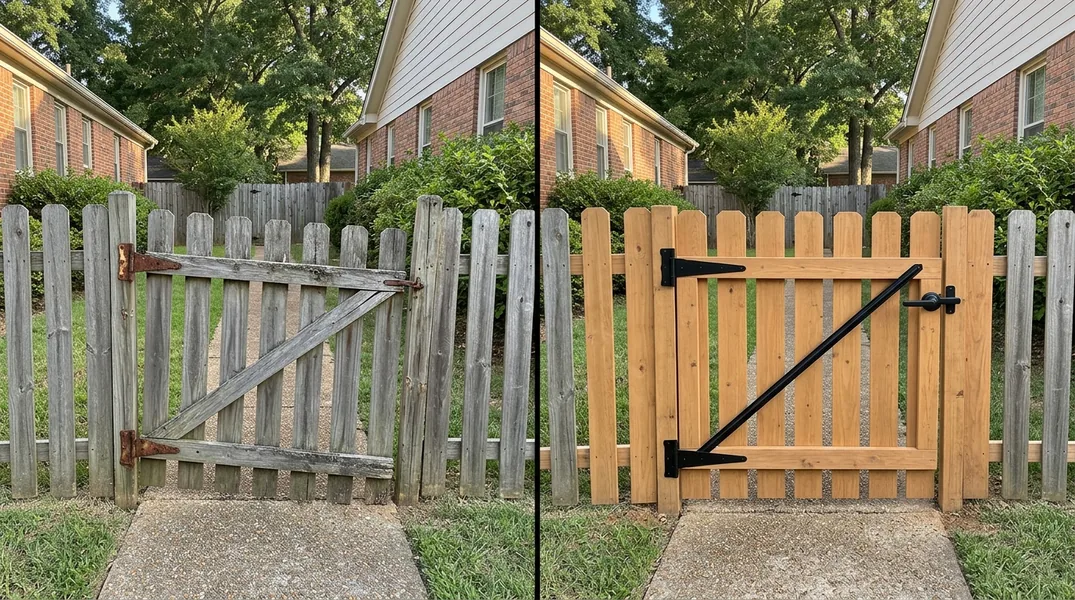
How Ice Storms Damage Fences
When winter weather hits Little Rock, ice storms bring more than just treacherous roads and downed power lines. Your fence line can suffer serious damage in ways that many homeowners don't anticipate until it's too late. Ice accumulation on fence materials creates weight that wood, vinyl, and even metal simply aren't designed to bear indefinitely.
The damage occurs in stages. First, as temperatures drop and moisture freezes, ice begins to coat every surface of your fence. A typical ice storm can deposit one to two inches of ice, which adds surprising weight to wooden posts and panels. Wood absorbs moisture naturally, so when that moisture freezes, it expands. This expansion creates internal stress within the wood fibers, weakening the structural integrity of posts and boards. Over hours, that stress builds until boards crack, split, or break entirely.
Additionally, ice storms often bring heavy winds. The combination of wind pressure and the extra weight of ice is what typically causes catastrophic failure. Posts that have been standing for years can snap at the base, and entire fence sections can collapse outward or inward depending on wind direction and how evenly the ice has accumulated.
Which Fence Materials Survive Ice Storms Best
Not all fencing materials are created equal when it comes to winter weather resilience. Understanding which materials hold up best can help you make an informed decision about your property's long-term protection and whether your current fence is vulnerable.
Vinyl & PVC Fence Installation has become increasingly popular in Little Rock because of its superior ice storm performance. Vinyl doesn't absorb water, so it won't expand when frozen. It's also flexible enough to bend under pressure rather than snap. However, extreme cold can make vinyl brittle, and very heavy ice loads can still cause damage if posts aren't properly installed. The key advantage is that vinyl recovers its shape once the ice melts and temperatures normalize.
Chain Link Fence Installation performs remarkably well during ice storms because it has no solid panels to catch wind or hold heavy ice accumulation. The open weave design allows ice to fall through naturally and wind to pass through rather than create pressure. The main risk with chain link is damage to the posts themselves, which can bend or lean if the ice load is extreme. The fabric itself rarely tears or breaks.
Wood & Privacy Fence Installation is the most vulnerable to ice storm damage. Wood absorbs moisture, expands when frozen, and lacks the flexibility of vinyl or the open design of chain link. Wooden posts can split vertically, boards can crack or snap, and entire sections can collapse. Older wooden fences with weathered posts and compromised wood grain are at even higher risk. That said, well-maintained wood fences with proper post installation and treatment can survive many ice storms, though they require regular inspection and sometimes reinforcement.
Aluminum & Ornamental Iron Fencing also performs well because metal is rigid and won't absorb water. However, metal conducts cold, which can cause condensation and ice formation. Ornamental fences with decorative scrollwork can accumulate ice in crevices, creating weak points. Aluminum is lighter and more forgiving than iron, but both materials are generally durable through ice storms if posts are properly set in concrete.
Signs Your Fence Has Ice Storm Damage
After an ice storm passes through, it's important to inspect your fence thoroughly. Some damage is obvious, but other problems can develop over weeks or months if not addressed promptly. Walking your property line and looking for specific warning signs can help you catch damage early before it worsens.
Visible cracks in wooden boards or posts are the most obvious sign of damage. These cracks allow water to penetrate deeper into the wood, which accelerates rot and decay. Leaning posts indicate that the foundation has been compromised or the post itself has shifted. If your fence leans away from your property, the structural failure has already begun. Broken or missing boards, splintered wood, and separated joints are all signs that your fence took impact damage during the storm.
For vinyl fences, look for cracks, warping, or posts that have shifted out of plumb. Vinyl can develop hairline cracks that allow water infiltration, which can freeze inside the material and cause further damage. For chain link, check for bent posts, sagging fabric, or areas where the fence has pulled away from its posts. Metal fences should be inspected for bends, rust developing at stress points, and posts that are no longer vertical. Even small damage should be documented and addressed, as ice storms often weaken structures in ways that aren't immediately catastrophic but lead to failure during the next severe weather event.
Winter Fence Repair and Replacement Options in Little Rock
Once ice storm damage occurs, homeowners in Little Rock have several options depending on the severity and type of damage. The decision often comes down to cost, material preference, and how much of the fence is affected.
For minor damage limited to a few boards or panels, repair is usually the most economical choice. A damaged board can be replaced individually, and a leaning post can sometimes be reinforced or reset. However, if damage is widespread, replacing the entire fence section or the whole fence line may be more cost-effective in the long run. A fence that has lost structural integrity will continue to deteriorate and may fail again during the next storm, costing you more money in repeated repairs.
This is an excellent time to consider upgrading to a more ice-storm-resistant material. If your wooden fence has been damaged, replacing it with Vinyl & PVC Fence Installation or Chain Link Fence Installation can provide better long-term protection against winter weather. While the upfront cost may be higher, you'll save money on maintenance and repairs over the years. Little Rock Fence Pros can help you evaluate your options and recommend the best solution for your property. Call us at (501) 476-2299 or request a free estimate to discuss your repair or replacement needs.
Prevention: How to Protect Your Fence Before the Next Ice Storm
While you can't prevent ice storms, you can take steps to minimize damage to your fence before severe weather arrives. Proper maintenance and strategic reinforcement can significantly improve your fence's ability to withstand ice accumulation and wind pressure.
For wooden fences, keep wood sealed and treated to minimize water absorption. Regular staining or sealing every two to three years reduces the amount of moisture wood can take in, which means less expansion when that moisture freezes. Inspect posts annually for signs of rot or damage, and replace compromised posts before winter arrives. Ensure that all posts are set deep in concrete and that the concrete is still solid. Posts set only in soil can shift over time, making them more vulnerable to ice and wind damage.
For all fence types, trim tree branches that hang over your fence. Heavy ice can accumulate on branches, and when they break under the weight, they can fall on and damage your fence. Remove debris from around fence posts so water can drain properly and won't pool and freeze at the base. Check that your fence is properly graded so water runs away from posts rather than collecting around them. These simple preventive measures can extend your fence's life and reduce the likelihood of ice storm damage.
When to Call a Professional for Ice Storm Fence Damage
If your fence has sustained significant damage from an ice storm, it's time to call a professional. While minor repairs like replacing a single board might be a DIY project, structural damage requires expertise and proper tools to fix safely and correctly.
Professional fence contractors can assess whether damage is repairable or if replacement is necessary. They understand local building codes, can ensure posts are set to proper depth and specifications, and have the equipment to remove and install fence sections safely. Attempting major repairs without proper knowledge can result in a fence that looks repaired but isn't structurally sound, putting your property and safety at risk.
Little Rock Fence Pros has years of experience repairing and replacing fences damaged by ice storms and severe weather. Our team can assess your fence, recommend the best course of action, and handle the work professionally. Whether you need repair or replacement, we're here to help your fence recover and prepare for future seasons. Contact us at (501) 476-2299 or visit our website to request a free estimate today. We serve Little Rock and the surrounding areas, and we're ready to get your fence back in shape.
Looking for a professional tree service in Little Rock? Little Rock Fence Pros responds fast for all your fence needs.
Get a Free Quote