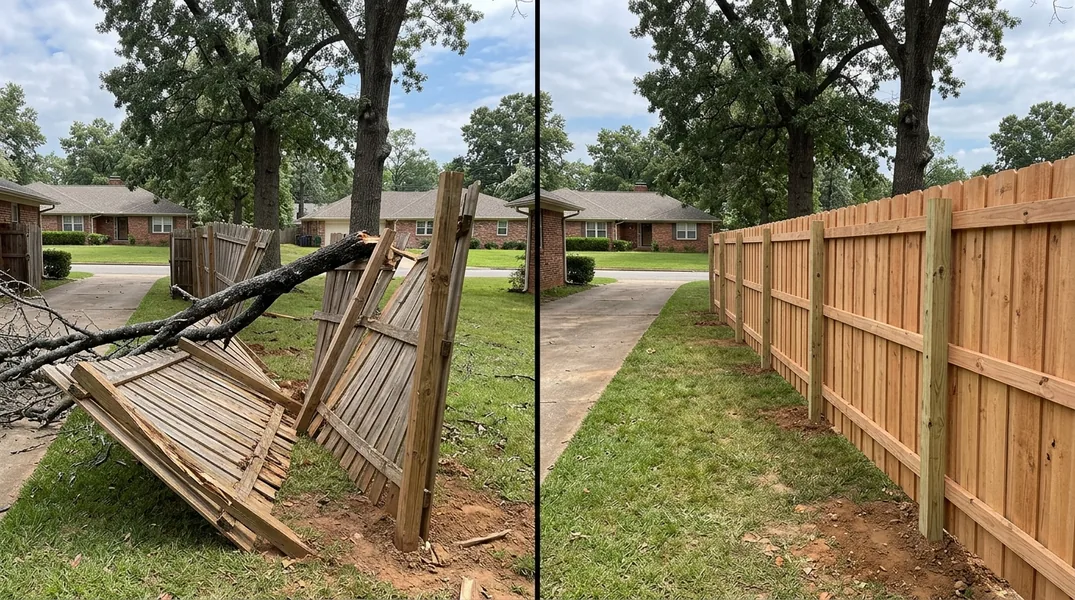
Understanding Storm and Ice Damage to Fences
Arkansas weather can be unpredictable and severe. From sudden ice storms to high-wind events, Little Rock homeowners face real risks to their property each year. Fences, which are often the first line of defense against the elements, frequently bear the brunt of this damage. Storm damage to fences can range from minor issues like a few fallen boards to catastrophic failures where entire sections collapse under the weight of ice or are uprooted by powerful winds.
Ice damage is particularly common in central Arkansas. When ice accumulates on fence panels and posts, the added weight can exceed what the structure was designed to support. Wood fibers weaken in freezing conditions, making them more brittle and prone to cracking. Additionally, the freeze-thaw cycle that occurs during winter weather causes wood to expand and contract, leading to warping, splitting, and eventual failure. Even Vinyl & PVC Fence Installation can suffer damage during severe ice storms, though vinyl is generally more resilient than wood. Understanding the types of damage your fence might sustain helps you recognize when professional repairs are necessary and when insurance might cover the costs.
Does Homeowners Insurance Cover Fence Damage
This is one of the most common questions homeowners ask after a storm, and the answer is not always straightforward. Whether your homeowners insurance covers fence damage depends on several factors, including the cause of the damage, your specific policy language, and your insurance provider's guidelines. In general, most standard homeowners insurance policies cover damage caused by sudden, accidental events like storms, falling trees, and severe weather. However, damage caused by poor maintenance, wear and tear, or gradual deterioration is typically not covered.
If a tree falls on your fence during a storm, your homeowners insurance is likely to cover the damage. Similarly, if high winds or heavy ice cause structural failure, you generally have a strong claim. The key word is 'sudden' and 'accidental'. If your fence was already leaning, rotting, or showing signs of weakness before the storm, your insurer may deny the claim or argue that the damage resulted from lack of maintenance rather than the weather event itself. It is important to contact your insurance agent as soon as possible after storm damage occurs. Many policies have time limits for filing claims, and documenting the damage with photos and videos immediately after the event strengthens your case. Your insurer may send an adjuster to inspect the damage and determine coverage eligibility. If you are unsure whether your fence damage qualifies for coverage, do not hesitate to ask your agent directly and request a written explanation of their decision.
Filing an Insurance Claim for Fence Damage in Little Rock
Once you have determined that your fence damage may be covered by insurance, the next step is filing a formal claim. Start by reviewing your homeowners insurance policy to understand your coverage limits and deductible. Most policies have a deductible, which is the amount you must pay out of pocket before insurance kicks in. For example, if your deductible is $1,000 and the repair cost is $2,500, your insurance would cover $1,500. Understanding this figure helps you decide whether filing a claim makes financial sense, especially if repair costs are close to your deductible amount.
Document everything thoroughly before filing. Take clear photographs and videos of the damaged fence from multiple angles, showing the full extent of the damage and any debris or fallen trees involved. Keep records of the date and time of the storm and any weather reports that corroborate the severity of the event. Write down a detailed description of what happened and how the damage occurred. When you contact your insurance company, provide all this documentation along with your policy number and a clear account of the incident. Your insurer will likely schedule an inspection, so be sure to keep the damaged fence in its current state until the adjuster has evaluated it. Do not make temporary repairs or remove debris until you receive approval from your insurance company, as doing so could complicate your claim. After the adjuster's inspection, your insurer will provide a damage assessment and coverage determination, typically within a few weeks.
Repair Timelines After Storm Damage: What to Expect
The timeline for repairing storm-damaged fences varies depending on several factors. If your claim is approved quickly and you hire a contractor immediately, minor repairs might be completed within a week or two. However, more extensive damage requiring fence replacement can take longer. The timeline is affected by the availability of contractors in the Little Rock area, material availability, weather conditions, and the complexity of the repair work. After major storms, many homeowners file claims simultaneously, which can create a backlog for both insurance adjusters and fence contractors.
It is wise to get multiple repair estimates from reputable fence companies before deciding on a contractor. Little Rock Fence Pros can provide you with a detailed assessment and timeline for your specific situation. When you request a free estimate, our team will evaluate the damage, discuss repair options, and give you a realistic timeframe for completion. Some homeowners opt for Wood & Privacy Fence Installation to replace damaged sections, while others may choose to upgrade to more weather-resistant materials. The choice depends on your budget, insurance coverage, and long-term preferences. Once repairs begin, most straightforward jobs can be completed within a few days to a week, though larger projects may take longer. Communication with your contractor is essential to stay informed about progress and any unexpected complications that may arise during the work.
Choosing the Right Fence Material After Storm Damage
When your fence has been damaged by storms or ice, the repair or replacement process offers an opportunity to consider whether your current fence material is the best choice for your situation. Wood fences, while beautiful and traditional, require regular maintenance and are more susceptible to weather damage. After a severe storm, some homeowners decide to upgrade to more durable materials that can better withstand Arkansas weather. Vinyl & PVC Fence Installation is increasingly popular because vinyl resists rot, warping, and ice damage better than wood. Vinyl does not require staining or sealing and can last 20 to 30 years with minimal maintenance.
Another option is Chain Link Fence Installation, which is highly affordable and durable, though it offers less privacy than wood or vinyl. For homeowners seeking a more decorative option, Aluminum & Ornamental Iron Fencing provides an elegant appearance with excellent durability and low maintenance requirements. When discussing your repair options with contractors, ask about the pros and cons of each material in the context of Little Rock's climate. Your insurance settlement may cover the cost of materials up to a certain amount, so understanding your coverage limits and the pricing of different options helps you make an informed decision. Some homeowners use insurance proceeds to repair like-for-like, while others invest additional funds to upgrade to a superior material that will better protect their property long-term.
Preventing Future Storm and Ice Damage to Your Fence
While you cannot prevent severe weather, there are steps you can take to minimize the risk of storm and ice damage to your fence. Regular maintenance is the first line of defense. Inspect your fence at least twice a year, looking for signs of rot, loose boards, leaning posts, or structural weakness. Address minor issues promptly before they become major problems. For wood fences, apply a weather-resistant stain or sealant every two to three years to protect the wood from moisture and UV damage. Trim tree branches that hang over your fence, as these can break under the weight of ice or snap during high winds and damage the fence below.
After winter storms, clear ice and snow accumulation from your fence as safely as possible to reduce the weight burden on the structure. If your fence shows signs of damage after a storm, do not delay in getting it inspected and repaired. Small cracks or leaning posts can worsen quickly and lead to more extensive damage. If you are concerned about your fence's ability to withstand future storms, contact Little Rock Fence Pros at (501) 476-2299 to discuss reinforcement options or material upgrades. Investing in preventive maintenance and durable materials now can save you thousands of dollars in repair costs and insurance complications down the road. Our team can help you assess your fence's current condition and recommend the best path forward for your home and budget.
Looking for a professional tree service in Little Rock? Little Rock Fence Pros responds fast for all your fence needs.
Get a Free Quote