Understanding Pool Barrier Code in Arkansas
If you own a swimming pool in Little Rock, you're legally required to install a barrier that meets Arkansas pool safety standards. These regulations exist to prevent accidental drowning, particularly among young children. The Arkansas Department of Health enforces these codes, and failing to comply can result in fines, liability issues, and even criminal charges if an accident occurs on your property.
Pool barrier code in Arkansas is based on the International Swimming Pool and Spa Code (ISPSC), which has been adopted by the state. This means your pool fence must meet specific dimensional requirements, material standards, and safety features. Whether you're installing a new pool or upgrading an existing fence, understanding these requirements is essential. Many homeowners in Little Rock are surprised to learn that a standard residential fence may not automatically qualify as a compliant pool barrier without modifications or additional components.
Minimum Height Requirements for Pool Fences
The primary requirement for any pool fence in Arkansas is height. Your pool barrier must be at least 4 feet tall, measured from the ground level on the pool side of the fence. This height requirement is consistent across residential pools and is designed to create a physical deterrent that prevents children from easily climbing over or accessing the pool area without supervision. If your yard slopes, you'll need to measure height at the lowest point where the fence meets the ground.
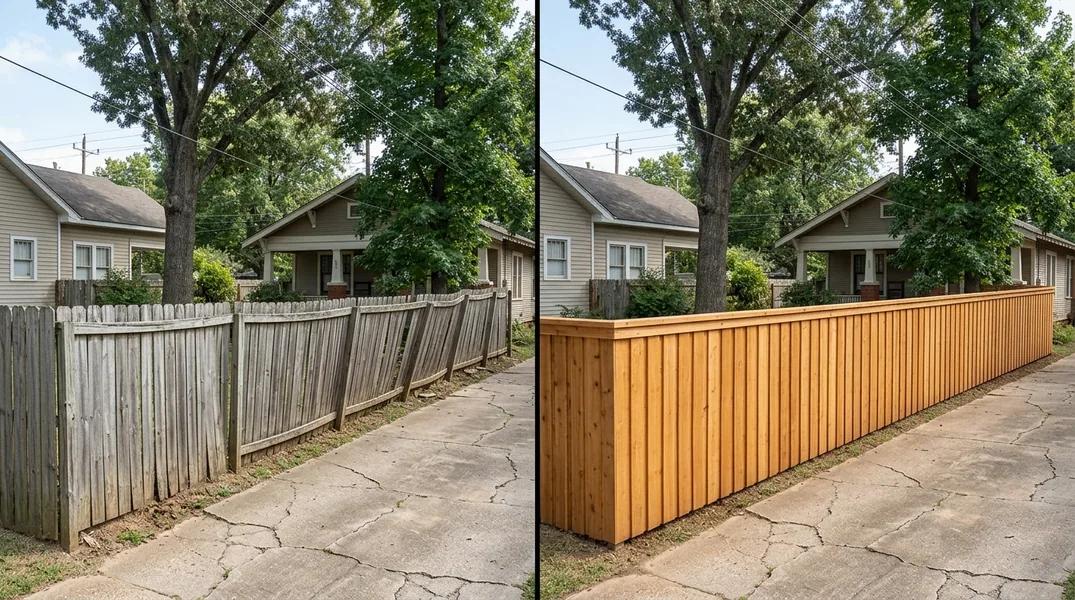
Many homeowners wonder whether a 4-foot fence is truly adequate, and the answer depends on your specific situation. While 4 feet is the legal minimum, some families with older children or athletic individuals may want to consider a taller fence for added security. Wood & Privacy Fence Installation can be designed to meet or exceed this requirement. It's worth noting that the fence must be maintained at the correct height year-round. If boards rot, warp, or break, you must repair them promptly to remain compliant with Arkansas pool barrier code.
Gap Spacing and Structural Requirements
Beyond height, Arkansas pool fence regulations are very specific about gaps and spacing throughout the barrier. The most critical rule involves horizontal gaps: there cannot be any opening larger than 4 inches between the bottom of the fence and the ground. This prevents small children from crawling underneath the fence to access the pool. Additionally, any vertical openings in the fence (such as spaces between pickets or boards) must not exceed 4 inches. This spacing rule applies to the entire fence, from top to bottom.
For Wood & Privacy Fence Installation, this means pickets must be spaced appropriately and the fence must be installed with minimal gaps at the base. If your fence is older or has settled over time, you may need to add filler boards or adjust spacing to maintain compliance. Diagonal gaps are also regulated: the largest circle that can pass through any opening in the fence cannot exceed 6 inches in diameter. This detailed specification ensures that a child cannot squeeze through any part of the barrier. Regular inspection of your pool fence is recommended to catch any new gaps that may develop due to weather, settling, or material degradation.
Self-Closing and Self-Latching Gate Requirements
One of the most important components of any pool barrier is the gate, and Arkansas law is strict about gate functionality. Any gate in your pool fence must be self-closing and self-latching. This means the gate must automatically swing shut and lock on its own without requiring manual action from the person using it. A self-closing pool gate uses a spring mechanism or hydraulic closer to ensure the gate closes every single time, even if someone forgets to push it closed.
The self-latching mechanism is equally critical. The latch must be positioned at least 54 inches above the ground and must not be accessible to young children. The gate should not be able to swing open on its own due to wind, settling, or gravity. When you close a compliant self-closing pool gate, you should hear it latch securely. Many homeowners find that a self-closing, self-latching gate is the single most important safety feature of their pool barrier because gates are the primary entry point to the pool area. If you're unsure whether your current gate meets these standards, contact Little Rock Fence Pros at (501) 476-2299 for a compliance inspection and upgrade options.
Material Options That Meet Arkansas Pool Barrier Standards
Arkansas pool barrier code doesn't specify a single material type, which means you have several options for building a compliant fence. Wood & Privacy Fence Installation is a popular choice for pool barriers because wood is durable, attractive, and can easily meet all spacing and height requirements. Pressure-treated wood resists rot and weathering, making it ideal for the moisture-rich environment around pools. Vinyl and PVC fencing also work well and require less maintenance than wood.
Vinyl & PVC Fence Installation offers the advantage of not warping, rotting, or developing gaps over time, which can be a significant benefit for pool safety. Aluminum & Ornamental Iron Fencing is another option, though you must ensure spacing requirements are met between vertical members. Chain Link Fence Installation can also serve as a pool barrier if the mesh openings are small enough to meet the 4-inch gap requirement. Whatever material you choose, the fence must be installed correctly and maintained to remain compliant with Arkansas regulations. Little Rock Fence Pros can help you select the best material for your pool barrier based on your budget, aesthetic preferences, and long-term maintenance expectations.
Getting Your Pool Fence Inspected and Installed Correctly
If you're building a new pool or upgrading an existing barrier, working with a qualified fence installation company is essential. A professional installer understands Arkansas pool barrier code and can ensure your fence meets every requirement from day one. This approach saves you time, money, and the stress of potential non-compliance. Many homeowners attempt DIY pool fence installations only to discover later that their fence doesn't meet code, requiring expensive modifications or replacement.
Little Rock Fence Pros specializes in installing pool barriers that fully comply with Arkansas regulations. We can assess your current fence, identify any gaps or height issues, and recommend solutions tailored to your property. Whether you need a complete new installation or repairs to bring an existing fence into compliance, our team has the expertise to get it right. We offer a free estimate so you can understand the scope and pricing before making a decision. Call us at (501) 476-2299 to schedule your pool fence inspection and ensure your family's safety is protected by a code-compliant barrier.
Looking for a professional tree service in Little Rock? Little Rock Fence Pros responds fast for all your fence needs.
Get a Free Quote